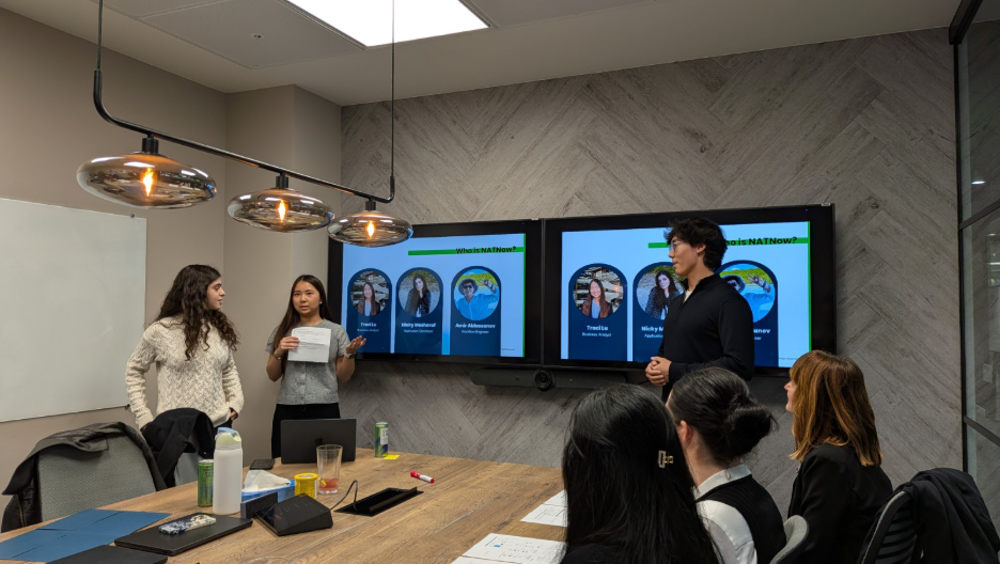
From Classroom to Enterprise: Students Build AI-Enabled Solutions with ServiceNow
What was the practicum?
Turning a real business challenge into a ServiceNow solution.
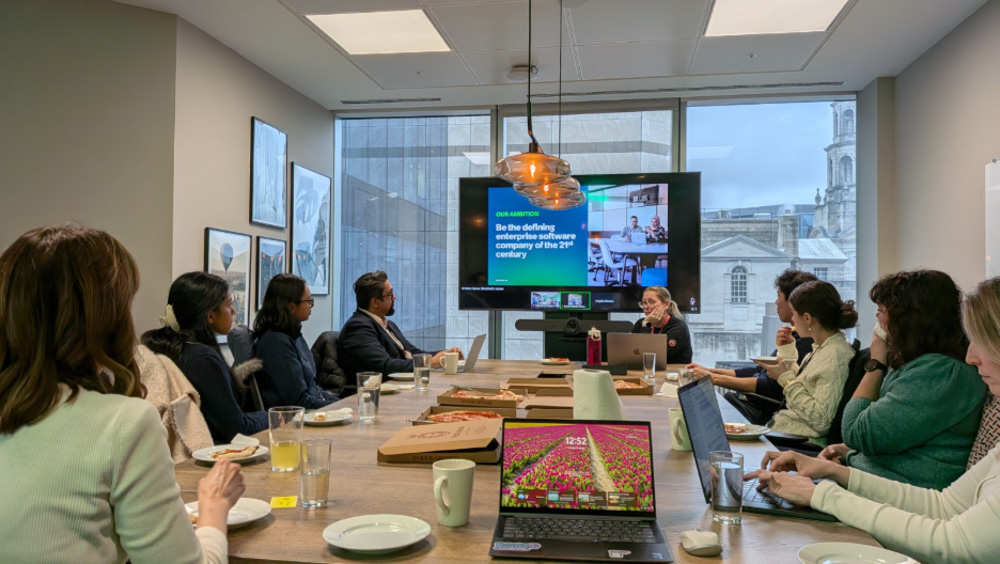
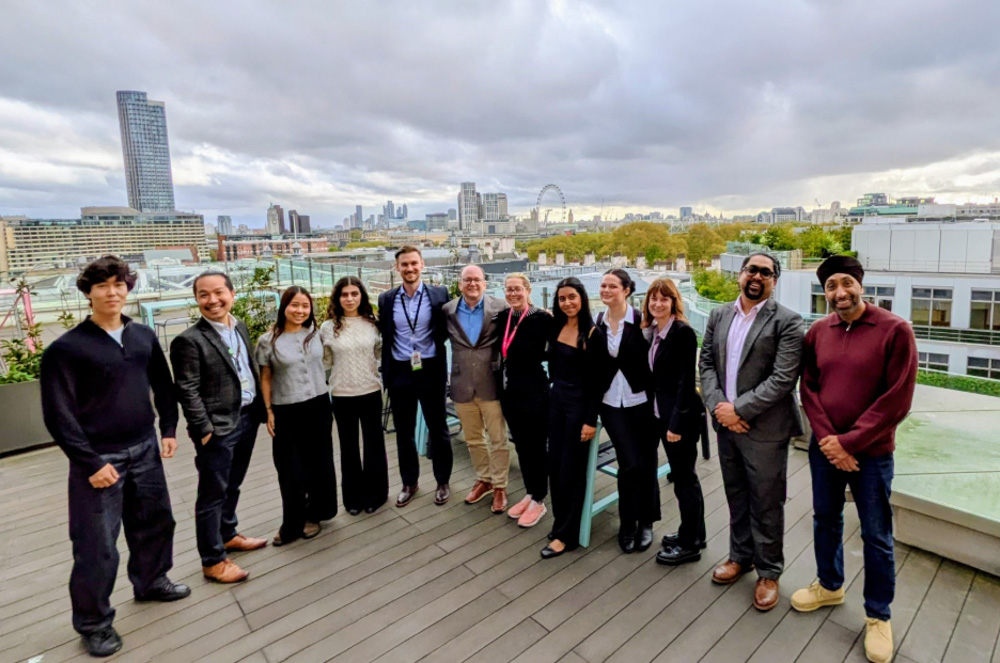
The ServiceNow Professional Practicum brought students out of the classroom and into the world of enterprise technology. Across the experience, students visited the ServiceNow office in London three times, meeting industry leaders, engaging with professionals, and gaining first hand exposure to the environment in which digital workflow solutions are developed, discussed, and delivered. This direct contact with industry gave the practicum a distinctive energy: students were not only learning about enterprise platforms, they were stepping into the professional spaces where those platforms shape real organisational change.
Centred on an overtime management challenge, the practicum asked students to work in teams to design a practical solution using the ServiceNow platform. The project required them to think through approvals, delays, user needs, operational constraints, and the wider value of improving how work moves through an organisation. AI was a central part of the wider ServiceNow context, particularly through concepts such as “Now Assist” and “Agentic AI”, which show how intelligent capabilities are increasingly embedded into enterprise workflows. This helped students see ServiceNow not only as a platform for building applications, but as part of a broader shift towards AI-enabled, data-informed, and more responsive ways of working.
What was involved?
Students developed a ServiceNow based overtime solution that they pitched at the end of the practicum. The challenge required them to consider how an organisation manages overtime requests, what information is needed to make fair and timely decisions, how approvals should move through a system, and how exceptions should be handled. By working through these details, students gained insight into the complexity behind what can initially appear to be a straightforward business process. The project encouraged them to consider not only whether a solution worked technically, but whether it made sense for real users, real teams, and real organisations.
The learning experience was strengthened through expert-led sessions, mentoring, and guided project support. These touchpoints helped students connect the technical build to the professional environment in which platforms such as ServiceNow are used to transform business operations. Students were also introduced to further learning opportunities, including ServiceNow training and certification pathways that could continue during and after the practicum. This helped position the experience as more than a module or project: it became a pathway into platform skills, AI awareness, industry confidence, and future career development.
How did students learn?
Students learned through a cycle of building, testing, feedback, and refinement. They began by interpreting the overtime challenge and identifying what a successful solution would need to achieve for different users. They then translated those requirements into workflows, platform features, approval routes, and user interactions within ServiceNow. This process required them to make design decisions, test assumptions, and adapt their thinking as the practical implications of the system became clearer. The final pitch gave students a professional setting in which to explain the value of their solution and demonstrate how their work addressed the original challenge.
This approach helped students experience the difference between learning about enterprise systems and actually designing within one. They had to consider the relationship between technology, people, and process, including how users interact with a system and how organisations gain visibility over activity. The AI dimension made this especially current, because ServiceNow increasingly places AI at the centre of how enterprise workflows are improved, automated, and made more responsive. As a result, the practicum developed technical capability alongside teamwork, communication, judgement, and professional confidence.
Key benefits for students included:
- Working on a real business problem: students moved beyond simulated classroom tasks and worked on a challenge grounded in organisational practice. The overtime solution required them to consider how processes operate in real environments, including approvals, escalation, delay management, data handling, and user adoption.
- Applied experience with ServiceNow and AI: the practicum introduced students to a major enterprise platform and showed how AI can support workflow-based solutions. This helped students understand how emerging technologies can be used to improve processes, support decision making, and create more effective service experiences.
- Direct engagement with industry professionals: through expert-led sessions, mentoring, and continuous support, students received guidance from professionals familiar with ServiceNow, enterprise technology, and applied digital transformation. This gave students insight into how industry practitioners frame problems, evaluate solutions, and support implementation.
- Professional skills development: the practicum required students to collaborate in teams, manage uncertainty, respond to feedback, explain technical decisions, and pitch their final solution. These are core employability skills that complement academic and technical learning.
- Pathways to further training and certification: students were given opportunities to pursue ServiceNow certifications and additional training during and after the practicum. This helped position the practicum not only as a course experience, but also as a bridge into future career development.
Student perspective

I decided early on to treat this practicum as a career launchpad rather than just a course requirement. We were given opportunities to work one-on-one with ServiceNow professionals, build a production-ready application, earn credentials and course credit, and form strong connections with our groupmates, professors, and industry professionals.
The practicum gave me insight into the industry that a classroom simply can’t replicate. It’s been incredible to see how my academic foundations in computing can be supercharged by a platform that is clearly the future of enterprise work. It’s an opportunity I would highly recommend to any student!
The ServiceNow Practicum pushed me to think through how a system actually holds up when people start using it, not just how it looks in a diagram. Working through approval chains, delays, and edge cases made every decision feel intentional and grounded in something real. Seeing it goes from an idea to a tested and winning solution made it one of the most rewarding things I’ve built so far.
Partner perspective

Partnering with the NU students through the ServiceNow Practicum has been a genuinely rewarding experience. Working together brings fresh perspectives, creativity, and a strong sense of innovation, and it’s been impressive to see how quickly students translate theory into practical, high quality outcomes. The collaboration is a great example of the value created when industry and academia work closely together, and the standard of work produced has been consistently excellent.
Faculty perspective

What made the ServiceNow Professional Practicum so valuable was the way it changed the shape of learning. Students were not simply completing a technical project; they were working within a professional context, responding to a real challenge, and learning to make decisions with users, organisations, and future technologies in mind. The partnership with ServiceNow brought authenticity to the experience, from the London office visits to the expert input and mentoring, and helped students connect their academic knowledge with the expectations of enterprise practice.
The introduction to AI through the ServiceNow ecosystem also gave the practicum a strong sense of relevance, showing students how platforms, workflows, and intelligent technologies are coming together in modern organisations. For me, the most meaningful outcome was seeing students grow in confidence and begin to recognise the professional value of what they were building.

The ServiceNow Professional Practicum is industry-integrated learning at its strongest: a live business challenge, a leading enterprise platform, and sustained contact with the practitioners who shape both. The quality of the students’ final solutions, and the confidence with which they pitched them, speaks to the depth of the partnership we have built with ServiceNow.
Northeastern University London is a charity
registered with the Charity Commission for
England and Wales (charity number 1189858).
Location
Devon House
58 St Katharine’s Way
London E1W 1LP, UK
+44 20 7637 4550
Northeastern University London is part of a global system, linking 14 campuses across the U.K., U.S., and Canada. Learn more about how our network serves as a platform for scaling ideas, talent, and solutions.
QUICK LINKS
Quick links
CAMPUS LOCATIONS