
‘Time Travelling’ with Early Modern Philosophical Texts at the British Library
What was the site visit?
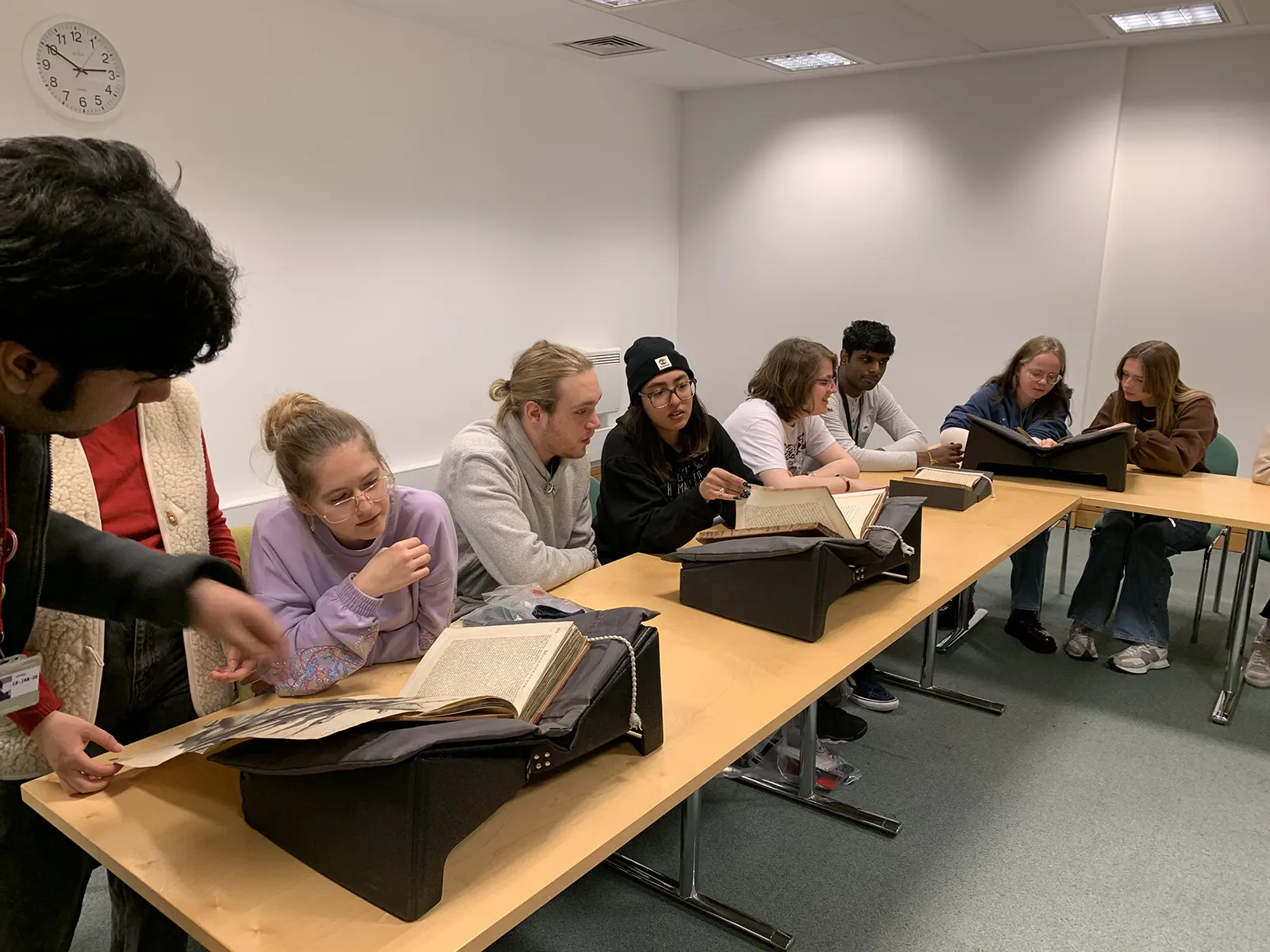
The session was a visit to the British Library as part of the course Early Modern Philosophy. The aim was to ‘time travel’ – or come as close as possible to doing so – by giving students the experience of what it was like to read philosophy in the early modern era.
What was involved?
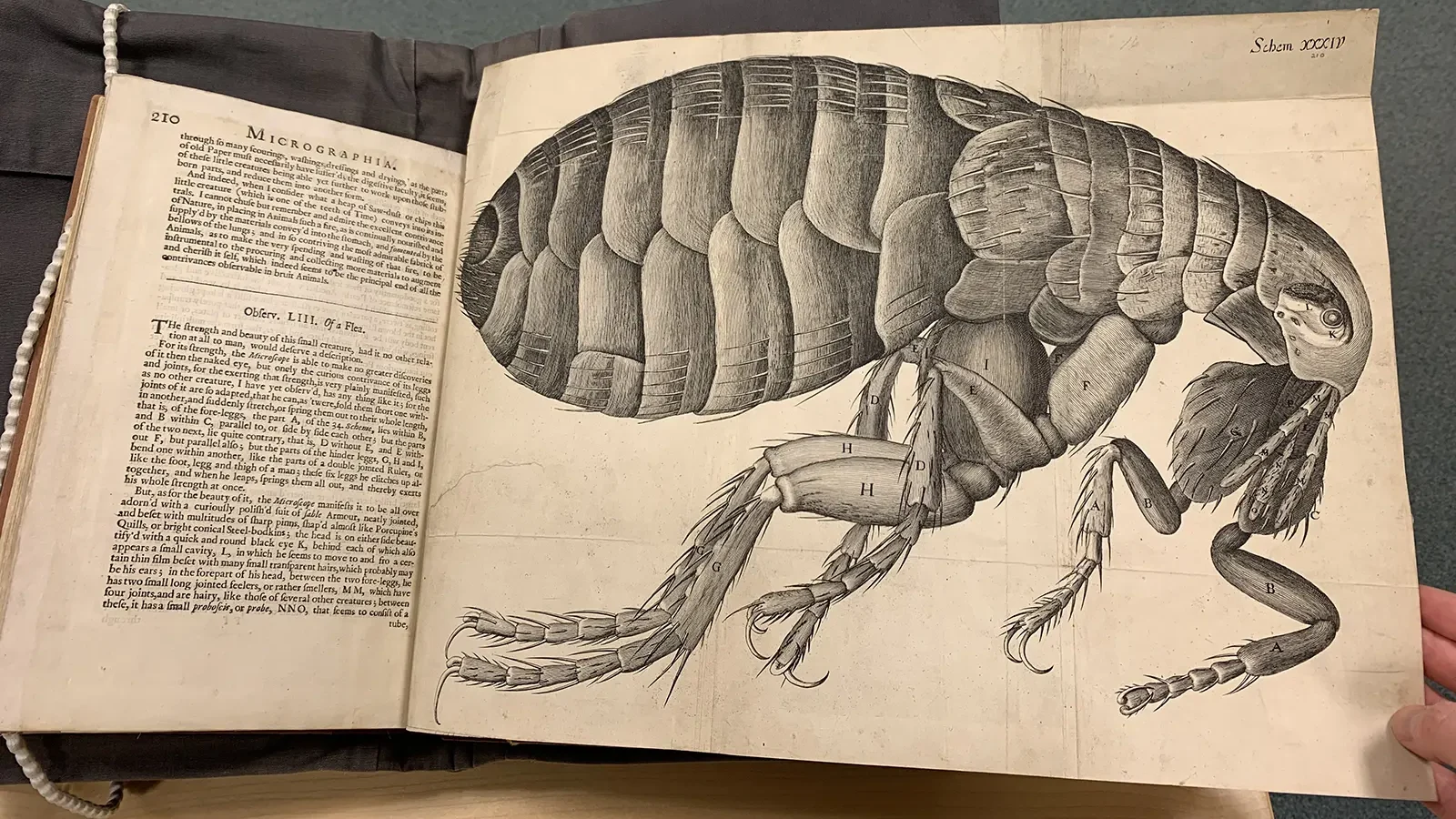
Students spent time engaging with and exploring first editions of early modern philosophy texts from philosophers such as George Berkeley, John Locke, David Hume, Margaret Cavendish, and Mary Shepherd, as well as early modern science writers like Robert Hooke. All these texts were originals and two to three hundred years old.
How did students learn?
Students learned by getting to experience something of what it would have been like to read philosophy in the seventeenth or eighteenth century. This prompted discussion about the different ways of reading philosophical texts – for example, holding in one’s hands a large first-edition volume (sometimes with fold out pages) as opposed to reading an online PDF – and how the medium of reading can shape one’s engagement with the text and its ideas. More broadly, students discussed the role of the reading process itself the experience of being a reader, in the understanding of philosophical ideas.
Key benefits for students included:
The session offered several key benefits. It added historical depth to students’ understanding of the early modern period and gave them a much richer sense of what it was like to be a reader of philosophy during that time. Perhaps most importantly, it helped students appreciate that philosophy always happens in a historical context; that philosophical ideas do not exist in a vacuum but are shaped by the contexts and manner (e.g., even the rooms and types of books we hold) in which we read, right, and think.
Student perspective

“The Early Modern Philosophy course at Northeastern University London placed a strong emphasis on experiential learning. As part of this, we had the privilege of visiting the British Library to explore their archive of seventeenth-century and eighteenth-century texts. Engaging directly with these historical works in person, rather than through digital scans, brought the course content to life and made learning both more engaging and enjoyable.”
Faculty perspective
“I have enjoyed running multiple iterations of this trip to the British Library, to engage with Early Modern philosophical texts as they were published and read in the 17th and 18th centuries. Since it’s impossible to actually time travel to the early modern, I think this experience is one of the most effective ways of thinking not only about the ideas that came out of Early Modern European philosophy – but of the experience of being a philosopher and doing a philosophy in this period.”
Northeastern University London is a charity
registered with the Charity Commission for
England and Wales (charity number 1189858).
Location
Devon House
58 St Katharine’s Way
London E1W 1LP, UK
+44 20 7637 4550
Northeastern University London is part of a global system, linking 13 campuses across the U.K., U.S., and Canada. Learn more about how our network serves as a platform for scaling ideas, talent, and solutions.
QUICK LINKS
Quick links
CAMPUS LOCATIONS