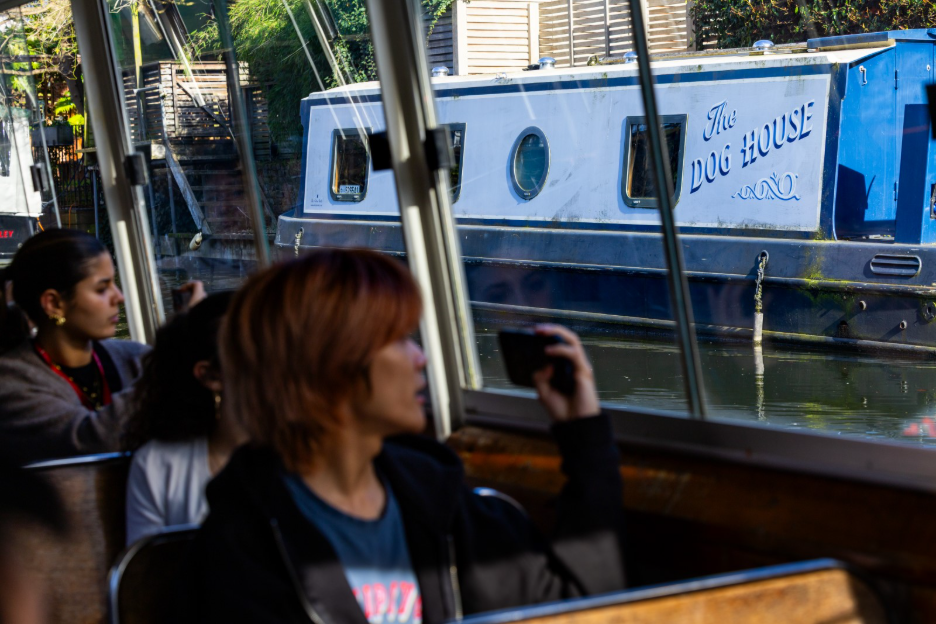
Regent’s Canal Boat Visit
This case study shows how an experiential site visit helped Architecture students connect classroom learning with the lived reality of London’s urban spaces. By travelling along Regent’s Canal by narrow boat, students explored the canal as infrastructure, community, ecology, heritage, and design context, then used those observations to inform their own architectural proposals.
What was the site visit?
The Architecture students went on a boat tour and exploratory visit to the Regent’s Canal. The experience took them from Camden Lock to Little Venice as part of LADES4160 Site Space and Programme (Now ARCH2130). The purpose of the visit was for students to experience what it was like to inhabit canal, the location of their final design project.
What was involved?
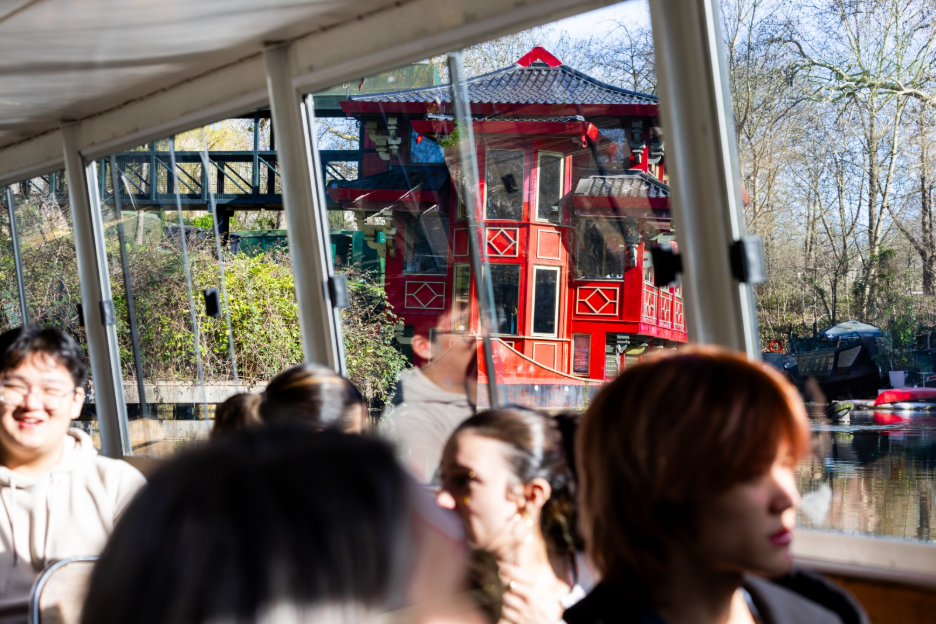
The tour, which took place on a typical narrow boat, investigated the Regent’s Canal as a living urban network through cultural, historical, and spatial analysis. Students examined how the canal functions as infrastructure, ecology, heritage site, leisure space, and home. Most importantly, they were able to witness first-hand what it was like to inhabit a boat, connecting to the urban environment of London from a highly unique perspective.
How did students learn?
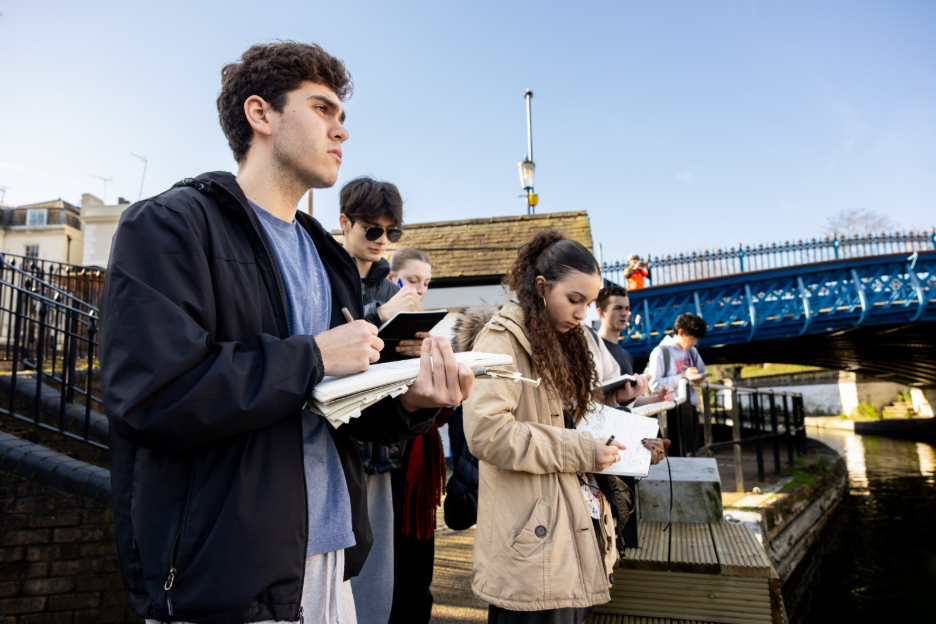
By analysing the canal’s physical characteristics, environment, and atmosphere, students were able to take in the nuances of the site. They looked at how people lived, the unique narrowboat communities and setup, as well as the rich history of the canal. Their investigations, sketches, and photographs tied directly to the final project in the class, the design of a community boat house. The observations gathered were directly implemented into the architectural function and expression of their buildings and design narrative.
Key benefits for students included:
- Opportunity to sketch and draw buildings along the canal
- Understand how people (the users of their boathouse design) navigate the canal
- Study key infrastructure for users along the canal including mooring sites, leisure spaces, functional support spaces like sanitation stations which would otherwise remain unseen
- Learn about the history of the canal and sites
- Tie in their observations to the detail design of their buildings
- Visualise how their building would connect to the water

Student perspective

Having the opportunity to step into the nomadic world of boat residents gave us a valuable perspective on who and what we were designing for. The most interesting part of the visit was recognizing the rich culture of Regent’s Canal alongside a stark economic divide, not only between the surrounding homes, but among the boat residents themselves.
Witnessing such a beautiful, creative community being pushed to the margins made us all the more determined to take action, helping it not only flourish but take root in the heart of London, so the whole city can claim it as its own.
Faculty perspective

The visit gave students something that no image or drawing can replicate; the actual experience of being on the canal in a narrow boat. This opened their eyes to the possibility of how to connect their designs to the water. The Regent’s Canal is filled with quirks: from floating book sellers and cafes to colourful narrow boats and innovative solutions for floating infrastructure and community programming.
These unique characteristics are exactly what we wanted students to absorb and bring back into their work. The canal isn’t just a body of water, it’s a community with its own logic, and that understanding is what separates a building that belongs there from one that simply sits next to it.